The Quiet Foreclosure — Another Canadian Cautionary Tale
What TouchBistro's $100-million ending should teach every founder about the money they take.
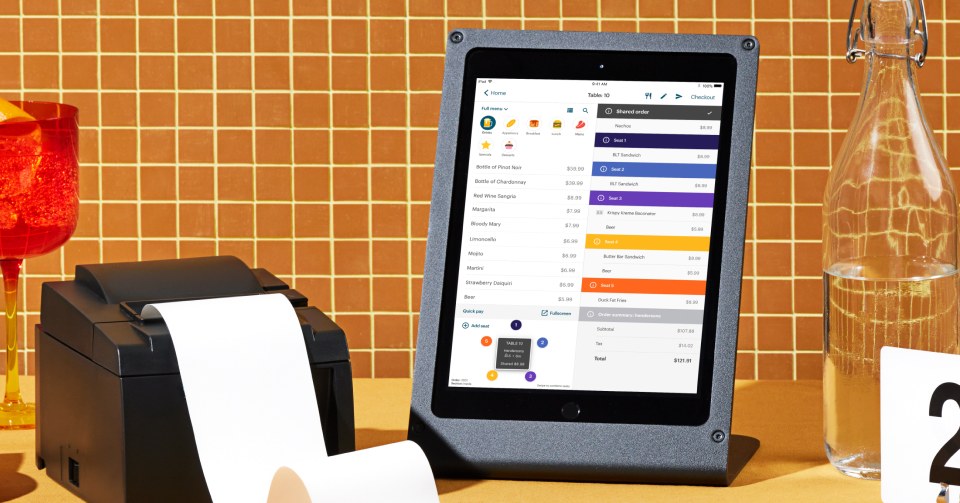
On July 7, Harris Computer announced that it had acquired TouchBistro, the Toronto restaurant point-of-sale company, with all the warmth these releases require: a note that it was "truly excited to welcome the outstanding TouchBistro team," a nod to 16,000 restaurants in more than 100 countries. What the release did not include was a price. The Globe and Mail's Sean Silcoff supplied it: $100-million, paid by a subsidiary of Constellation Software, whose entire business model is buying vertical software companies at rational prices and holding them forever.
One hundred million dollars, for a company that raised nearly US$319-million over its life. For a company whose 2019 Series E alone was $158-million, led by OMERS — at the time the pension fund's largest Canadian venture bet, announced with language about "a long-term commitment to support exceptional companies through all stages of development." For a company whose cap table included J.P. Morgan, Barclays, BDC, Recruit Holdings, Relay Ventures, Kensington Capital Partners and Ten Coves Capital.
That is not an exit. It is a salvage price. And the most instructive part of the story is that the July sale was not really the transaction that mattered. The transaction that mattered happened in December, and nobody put out a press release.
The repossession came first
Let's look at the mechanics that led to this first.
In November 2022, TouchBistro took CAD$150-million from Francisco Partners, the San Francisco technology investment firm. The announcement framed it as growth capital to fund expansion and acquisitions, and Francisco described itself as "the perfect partner." What it actually was, per the Globe's reporting, was convertible debt: senior money, carrying covenants calibrated to TouchBistro's own financial plan.
The company then missed that plan. Continued losses put TouchBistro offside its covenants, and in December 2025 Francisco exercised the machinery it had negotiated at signing. It converted its debt, plus accrued interest, into a new class of preferred shares, emerged holding more than 90 per cent of that class, and took control of the board. Existing shareholders — the pension fund, the banks, the venture firms, the founder, the employees — woke up as minority holders in a company they thought they owned. Seven months later the business was sold for $100-million, a price that, in a preferred-first waterfall, flows overwhelmingly to the top of the stack. OMERS took a nine-figure loss. The Globe reports significant capital losses for J.P. Morgan and BDC as well.
In corporate credit, this sequence — breach, conversion, control, sale to a consolidator — is routine enough to be unremarkable. In startup land it deserves its plainest name: a foreclosure, executed quietly, on one of the most celebrated companies in Canadian tech.
Three decisions built the funnel
TouchBistro did not stumble into that December. Fifteen years of history compress into three board-level choices.
The first: saying no at the top. Founded in March 2011 by Alex Barrotti to put restaurant point-of-sale on the then-new iPad, TouchBistro rode the mobile wave to become one of Canada's fastest-growing companies. When tech markets peaked, suitors arrived: the Globe reports the board rebuffed takeover interest from Lightspeed and another buyer at valuations in the hundreds of millions. Any of those deals would have returned real capital to everyone on the cap table, employees included. The board held out for more. More never came.
The second: swapping conviction for cost control, mid-land-grab. In April 2021 the board replaced its founder-CEO with Samir Zabaneh, a career finance executive with CFO stints at Q9 Networks, Moneris and Element Fleet Management — the man Silcoff, with a columnist's economy, called a "bean counter." Under his tenure the company cut spending and halved its workforce from a peak of about 600. Revenue growth, in the Globe's phrase, "slowed to a crawl," and the venue count fell from 23,000 to 16,000.
Now look across the border at the competitor. Toast absorbed the same pandemic that devastated TouchBistro's customer base, kept investing through it, attached payments economics that turned every restaurant into a compounding revenue stream, and went public in 2021. Today it serves roughly 171,000 locations on US$1.63-billion of quarterly revenue, having added about 7,000 net locations in the first quarter of 2026 alone — with co-founder Aman Narang as chief executive. One company treated the downturn as the moment to win the category. The other treated it as the moment to harvest a field it had not yet won. In a winner-take-most market, "efficient" growth below escape velocity is not discipline. It is liquidation with better optics.
The third: choosing debt to protect a number. This is the detail that belongs in every founder curriculum. According to the Globe's sourcing, one reason TouchBistro's board chose convertible debt in 2022 rather than raising equity was that an equity round would have repriced the company downward. Read that again. Faced with a choice between an honest down round — dilutive, embarrassing, survivable — and senior leverage that preserved the paper valuation, the board chose the instrument that protected the mark over the instrument that protected the company. The markdown it avoided in 2022 arrived anyway in 2026, at approximately zero, with interest.
What "vulture capital" actually is
The popular term is unfair in one respect: vultures wait for the animal to die on its own schedule. Structured credit carries a calendar.
Growth equity and structured credit are different businesses with different payoff functions, and the difference governs behaviour the moment a company misses plan. An equity investor needs the company to become worth multiples more; that is the only way the investor wins. A credit investor needs the company to be worth more than the loan; the equity beneath it is not a partner's stake but a margin of safety — other people's capital positioned to absorb losses first. When a growth-stage company with neither profits nor momentum layers nine figures of senior convertible debt onto its balance sheet, it has not extended its runway. It has written its lender a call option on the entire business, struck at the loan balance plus accrued interest, exercisable at the first covenant breach.
None of this was hidden. The terms sat in documents negotiated by sophisticated counsel and signed by a board that included some of the most capable institutional investors in the country. Francisco Partners did nothing its paperwork did not permit: enforcing covenants is not predation, it is the product functioning as designed. That is precisely the warning. The vulture in this story was invited through the front door, offered a seat at the table, and handed the keys through a mechanism politely called a conversion right.
And when control transferred, the natural buyer was already waiting. Constellation and its Harris operating group, as The Logic dryly puts it, "exist to roll up software firms": permanent capital, rational prices, hold forever. When the consolidator of last resort is the last bidder standing, the clearing price is whatever satisfies the debt stack. Everyone below it is a rounding error.
The collateral nobody prices
Balance sheets record the leverage. They do not record what the 2021–2025 regime liquidated to service it.
Cost programs carry a cruel accounting asymmetry: the savings appear in the P&L immediately, while the damage — roadmap velocity, the departure of missionary engineers and product people, customer confidence, narrative momentum — surfaces four to six quarters later. Which is exactly when covenant tests come due. A company can manufacture a year of improved margins by quietly liquidating its future, and the future files no objection until the renewal cycle, the churn report and the venue count deliver their verdict. TouchBistro's verdict: 23,000 venues down to 16,000, while its rival added 7,000 in a single quarter.
There is a romantic version of the founder argument, and it is wrong: founders are not talismans, founder-led companies fail constantly, and Toast itself ran under a hired CEO for the better part of a decade before elevating a co-founder. The rigorous version is about what founder-grade conviction supplies economically. It funds product bets that survive budget season. It retains people who joined a mission rather than a margin plan. It confers the legitimacy to make bet-the-company decisions that no caretaker executive can make. Whether or not the founder keeps the title, that conviction has to keep the power. TouchBistro removed it in April 2021 and installed a cost thesis in its place. The cost thesis produced neither growth nor profit — only compliance failures on a loan that should never have been the plan.
And then there are the people. A workforce halved from 600. A decade of employee options rendered, in all likelihood, worthless beneath a preferred-first waterfall. The builders who will make the next TouchBistro possible are reading how the last one ended, and talent is the one class of capital that studies the fine print of your previous deal before signing up for your next one.
The perspective from inside the house
The sharpest post-mortem came from a man with every reason to teach this lesson. John Ruffolo founded OMERS Ventures in 2011 and ran the pension fund's venture arm until 2018, and TouchBistro was one of the fund's portfolio investments during his tenure, alongside names like Shopify, Hopper and Wattpad; the $158-million cheque came later, in 2019, from OMERS Growth Equity, a separate arm, after his departure. He now runs Maverix Private Equity. Reacting to the sale, Ruffolo called the outcome distressing, and gave Constellation its due — a long record of "turning lemons into lemonade," with the asset staying Canadian — before landing on the part that stings most: despite all the hard work of the many employees, they "get ZERO."
His two takeaways compress this entire case study into a pair of sentences:
- On leadership: replacing the founder who built the business from the ground up demands extreme care, because "no one replaces the passion and resiliency of a founder."
- On the financing: reaching for a debt instrument in the post-COVID recovery to sidestep an equity writedown was, in his judgment, "likely a nail in the coffin" — the kind of choice that bites hard when the business fails to rebound quickly, because once the debt comes calling, things unravel fast.
And then the arithmetic this piece has been circling, stated plainly by a man who helped build the institution that absorbed the loss: "the equity investors lost everything anyway." The writedown the board refused to take on paper in 2022, every shareholder took in full, in cash, in 2026, with a lender's interest on top.
The classic mistake, in sequence
Strip out the names and dates and the TouchBistro story becomes a template — the same funnel that will claim the next over-capitalized category challenger that prizes its marks over its survival.
The sequence is compact enough to memorize:
- Become a category leader, attract credible acquisition offers near the top of the market.
- Decline them, anchored to peak comparables and the last round's paper valuation.
- Replace the founder with a cost-focused operator before the market is won.
- Watch the cuts fluff the P&L for a few quarters while product velocity, builders and customers quietly exit.
- Need capital; refuse the down round that would mark everyone's books; take senior convertible debt covenanted to your own plan instead.
- Miss the plan. Trip the covenants.
- Watch the lender convert debt plus accrued interest into a control class of preferred and take the board.
- Sell to the consolidator of last resort at a price sized to clear the debt stack.
- Preferred recovers first; equity is wiped; employees get zero; the press release calls it an exciting new chapter.
Every step is individually defensible in a board meeting. That is what makes the sequence lethal: no single decision looks like the fatal one, and by step six there are no decisions left to make.
The founder's rules
Distilled to what a board should staple inside every term-sheet folder:
-
Match the instrument to the certainty of your cash flows, not the ambition of your plan. Debt is serviced by revenue you already have; hope is not a coverage ratio. If covenant compliance requires the plan to work, the downside scenario belongs to your lender, and downside scenarios are where companies actually live.
-
Treat the down round as the safety equipment it is. A repriced equity round dilutes and embarrasses, but it keeps every shareholder in one instrument, pulling in one direction. Choosing senior debt to protect a paper valuation defers the markdown, compounds it at interest, and hands the pen to a counterparty whose upside is your collateral.
-
Model the miss before you sign. Run the case where you underperform plan by 20 to 30 per cent and ask the only question that matters about the term sheet: who controls the company in that scenario? If the answer is the lender, you have not raised capital; you have sold a call option on the business and booked the premium as runway.
-
Negotiate control provisions while you still have leverage. Covenant headroom, cure periods, conversion caps, board-composition triggers, constraints on a forced sale. Your negotiating power peaks the day before signing and never returns; after a breach, it is zero by construction.
-
Protect the innovation engine the way a lender protects liquidity. Set a floor on product investment as a matter of board policy, and track regretted attrition of builders as closely as churn. In software, the roadmap is the collateral; an acquirer ultimately pays for what you will ship, not for what you saved.
-
Keep founder-grade conviction in power, whatever the org chart says. Installing an operator can work once a market is won and needs harvesting; doing it during a land grab converts a competitor into a caretaker. If the founder must go, the conviction must not — someone in the room has to remain irrationally long the product.
-
Sell when someone credible is buying. Windows close faster than boards admit, and anchoring on peak-market comparables is how decent exits become footnotes. Run an honest, banker-grade sell-versus-compete review every year. "We rebuffed offers in the hundreds of millions" is a sentence that only ever appears in post-mortems.
In fairness
Intellectual honesty requires different perspectives. Francisco Partners extended nine figures at a moment when equity markets had largely closed to flat-growth SaaS; the capital was real, the terms were disclosed, and a board advised by elite counsel signed them. Lenders enforcing covenants is not a scandal, and plenty of durable companies have been built with debt used well. Nor was the alternative obviously better: without that financing, TouchBistro's reckoning might simply have arrived in 2023 instead of 2026. Hired CEOs rescue companies all the time, founder worship has buried its own share of cap tables, and a permanent home inside Constellation — which pledges to hold its businesses indefinitely — may genuinely be the best remaining outcome for TouchBistro's 16,000 restaurants and the team that stayed. This is a point even Ruffolo, in his critique, was careful to concede in his commentary.
But the counter-case sharpens the warning rather than dissolving it. The failure here was a category error made at the top of the market and paid for at the bottom: mistaking a counterparty for a partner. Growth equity is, imperfectly: long your dream. Structured credit is: long your collateral. Both parties said partner in the press release, only one of them meant it the way founders heard it.
The paperwork catches up
TouchBistro's board set its own calendar. In 2021, when it declined offers worth hundreds of millions. In 2021 again, when it traded founder conviction for cost control before the market was won. And in 2022, when it borrowed nine figures against a plan it then missed, in part to avoid admitting what the company was actually worth. December's conversion and July's sale were merely the paperwork catching up to those three choices.
The lesson for founders is not to fear capital, nor even to fear credit funds, which are at least candid about their function. It is to know, with precision, what every dollar on your cap table is incentivized to do to you when things go wrong — and to remember that culture, builders and founding conviction are the only assets a startup owns that compound in its favour regardless of market conditions.
Everything else, as TouchBistro discovered, is convertible.
Enjoyed this? Get in touch or read more on the blog.